Thinking about a small ranch or acreage near Winfield but not sure where to start? Buying rural land is exciting, yet the details can feel complex. You want usable land, reliable water, clear access, and a clean path to build. This guide walks you through the exact checks to run in Webb County, who to call, and how to protect your investment. Let’s dive in.
What “near Winfield” means locally
Winfield shows up in mapping tools as a labeled locality within Webb County near Laredo, not as a separate town. Properties marketed as “near Winfield” are typically governed by county rules and services. Treat each parcel as a Webb County rural property and confirm services and permitting at the parcel level.
To understand the place name and context, review the locality reference on Winfield’s map entry, then confirm parcel details using Webb County Planning and GIS maps.
Quick buyer checklist
Use this list when you tour or request info on any parcel near Winfield:
- Is there legal, recorded access and is the road county maintained? Verify road status with Webb County Road and Bridge.
- Is there a current survey and full legal description? Ask about recorded easements or rights of way.
- Is there a private well? Request recent water test results and the well completion report. The EPA recommends annual testing for private wells.
- Does the parcel have a permitted septic system, or could it qualify for the Texas 10-acre exemption? Confirm rules with TCEQ’s OSSF guidance.
- What soils are present at likely homesite and drainfield areas? Screen with the USDA NRCS Web Soil Survey.
- Are mineral rights severed, or are there active oil and gas leases? Require title review.
- What are the annual property taxes and any special valuations? Check Webb County tax rate information.
- What improvements transfer with the sale and what is their condition?
Access and roads: confirm it is usable
Start by confirming legal access to the property. You want recorded access via a public road, an easement, or a private road with a written maintenance agreement. Ask the seller for the legal description, current survey, and any recorded easements.
Next, find out who maintains the road. County maintenance can lower your long-term costs compared to a private road that owners must maintain. Call or check maps with Webb County Road and Bridge and review parcel context in Webb County GIS.
If the route involves gates or locks, clarify who controls access. Make sure the access you use to view the property is the same access that will be recorded for your ownership.
Water: private wells and aquifers
Many rural parcels rely on private wells. Private wells are not regulated under the federal Safe Drinking Water Act, so owners are responsible for testing and treatment. The EPA’s private well guidance recommends testing annually for bacteria and nitrates, and early in escrow when you buy.
Webb County draws on a mix of aquifers across the region. Yields and water quality vary by location and depth. Regional planning documents note major and minor aquifers in the planning area, including the Gulf Coast and Carrizo–Wilcox outcrops, as well as local formations. Review the aquifer context in the regional water plan materials and ask a licensed well driller about expected yields near your parcel.
Action items:
- Request the well completion report and recent lab tests from the seller.
- Order an independent water test early in escrow to confirm potability.
- If you plan irrigation or multiple homes, ask a licensed driller or hydrogeologist about likely yield and consider a pump test before closing.
Septic systems and the 10-acre rule
Most rural homes use an on-site sewage facility. In Texas, septic systems are regulated by the Texas Commission on Environmental Quality. A permit and approved plan are required for most systems. There is a narrow state provision often called the 10-acre exemption for a single-family home on a 10-acre or larger tract, but you should not assume it applies. The site still needs a professional evaluation to confirm suitability.
Learn the rules and local permitting process with TCEQ’s OSSF page.
Action items:
- Ask for any existing permits, the site evaluation, and the license to operate.
- If you will install or replace a system, hire a licensed site evaluator or engineer to test soils and design the system.
- Budget for upgrades if soils or setbacks limit standard options.
Soils and building sites
Soils drive cost and feasibility for your driveway, building pad, and drainfield. The USDA NRCS Web Soil Survey is the best free tool for a quick screen. It shows mapped soils, slope, drainage, and septic suitability.
Use it to identify promising homesite areas and any constraints. Then confirm on site with a licensed site evaluator or geotechnical professional before you finalize plans.
Fencing, improvements, and utilities
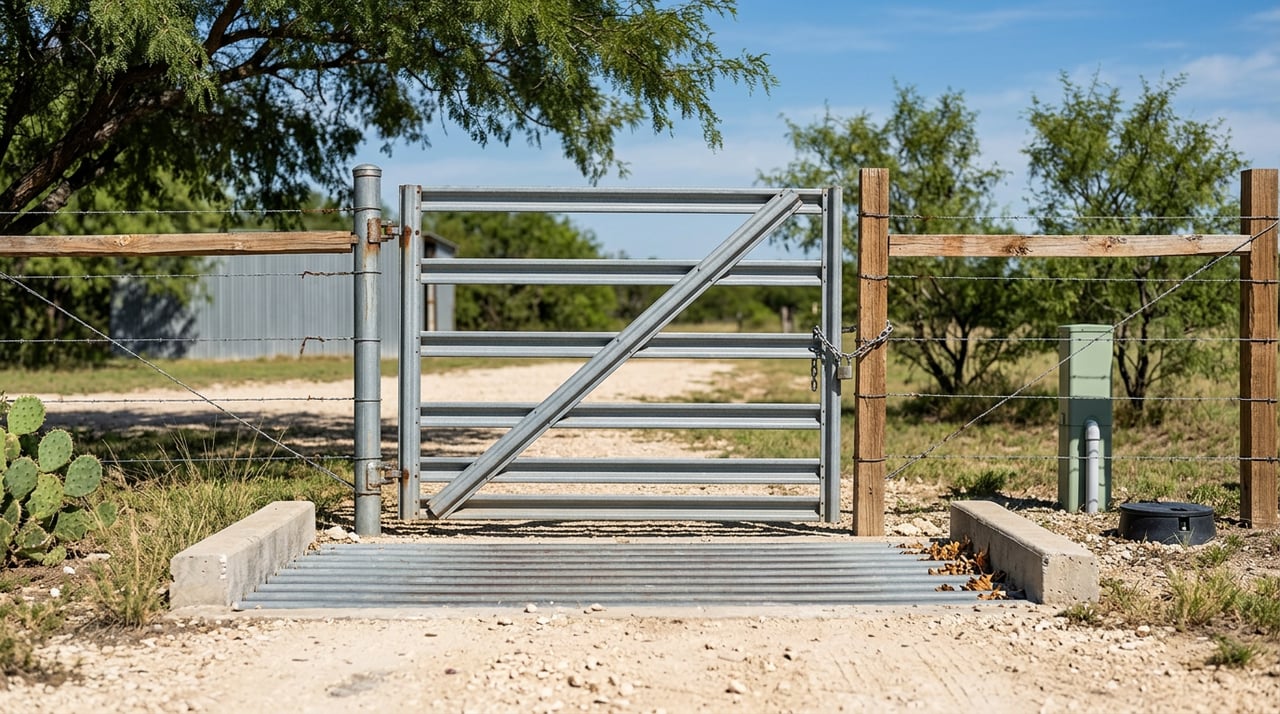
Walk fence lines and look at cross fencing, gates, and any corrals. Ask who owns fence segments along shared boundaries and whether any repairs are needed. List every improvement included in the sale, such as barns, stock tanks, troughs, solar pumps, and storage sheds.
Utilities are parcel specific in rural Webb County. Ask the seller which electric provider serves the area, whether power is at the property, and if a line extension is needed. Get a written estimate for any extension. For internet, confirm options early. Many rural areas rely on satellite or fixed wireless.
Mineral rights and surface use
In Texas, mineral rights are often severed from the surface estate. An existing oil or gas lease can give the mineral owner or lessee certain access rights. Do not assume a land purchase includes minerals. Require a title commitment that lists mineral exceptions and recorded leases. Ask a real estate attorney to review title language and discuss surface protections.
Floodplain, drainage, and environmental checks
Screen the parcel using FEMA flood maps and request local guidance on any permit needs if the site lies within a regulated floodplain. Check county GIS for drainage features and easements. If a portion of the land has signs of past dumping or industrial use, ask your attorney or inspector about additional environmental checks.
Good drainage planning can save you money. Place driveways and building pads to avoid low-lying, flood-prone areas.
Taxes, rates, and ongoing costs
Texas property taxes are set by the county and local taxing units. Review the seller’s most recent tax bill and calculate your estimated annual costs. Webb County provides rate summaries and TNT materials that help you understand trends. See the Webb County tax rate information page.
Ask whether the parcel has an agricultural valuation and what you must do to maintain it. A CPA can advise you on qualifications and tax implications.
Your professional team
Build a small team early to keep your deal on track:
- Real estate attorney: reviews title, minerals, and easements; advises on surface protections.
- Title company: issues the title commitment and lists recorded exceptions that affect use.
- Licensed surveyor: marks boundaries and shows fence and utility locations relative to the legal lines.
- Licensed site evaluator or civil engineer: performs septic evaluations and designs systems.
- Licensed well driller or hydrogeologist: reviews well logs, estimates yield, and runs pump tests.
- Licensed inspector or ranch manager: checks fences, corrals, water lines, and improvements.
- CPA or tax advisor: helps you understand property taxes, agricultural valuation, and ownership implications.
A simple due diligence timeline
Follow these steps to lower risk and keep your purchase smooth:
- Early screening: Pull the parcel in Webb County GIS, run soils in the Web Soil Survey, and look at flood zones.
- Seller documents: Request the survey, well and septic records, a list of improvements, and the current tax bill.
- Water and septic contingencies: Order an independent well test and a septic site evaluation as contract contingencies. Use EPA well guidance and TCEQ OSSF rules as references.
- Title and minerals: Order a title commitment that addresses legal access and mineral exceptions. Have your attorney review mineral and surface-use language.
- Improvements and fencing: If livestock or ranch operations are part of your plan, get condition estimates and include repairs or replacements in your budget and offer strategy.
Ready to look at land near Winfield?
When you are buying acreage, the right plan can save you time and money. With 19 years of local experience and hands-on buyer representation, you get practical guidance, strong negotiation, and a clear due diligence roadmap. If you want help identifying the right parcels and coordinating inspections and evaluations, connect with Cindy E Cantu to get started.
FAQs
What does “near Winfield” mean for utilities and permits?
How do I confirm if a road is county maintained in Webb County?
How do I evaluate a private well on rural acreage?
Do I need a septic permit if my tract is over 10 acres in Texas?
- A narrow exemption may apply in some cases, but do not assume it. Review TCEQ’s OSSF rules and get a licensed site evaluation.
Which soils are best for building and septic in Webb County?
How can I estimate property taxes for a ranch near Winfield?